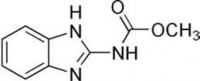
Carbendazim is a widely used, broad-spectrum benzimidazole fungicide and a metabolite of benomyl.
The fungicide is used to control plant diseases in cereals and fruits, including citrus, bananas, strawberries, pineapples, and pomes. It is also controversially used in Queensland, Australia on macadamia plantations.A 4.7% solution of carbendazim hydrochloride, sold as Eertavas, is marketed as a treatment for Dutch elm disease.
Studies have found high doses of carbendazim cause infertility and destroy the testicles of laboratory animals. Maximum pesticide residue limits (MRLs) have reduced since discovering its harmful effects. The MRLs for fresh produce in the EU are now between 0.1 and 0.7 mg/kg with the exception of loquat, which is 2 mg/kg.[6] The limits for more commonly consumed citrus and pomme fruits are between 0.1 and 0.2 mg/kg.
CAS number 10605-21-7 Y PubChem 25429 ChemSpider 23741 Y UNII H75J14AA89 Y KEGG C10897 Y ChEMBL CHEMBL70971 Y RTECS number DD6500000 Molecular formula C9H9N3O2 Molar mass 191.19 g mol−1 Appearance Light gray powder Melting point 302-307 °C (decomposes)