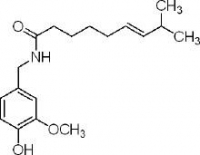
DAZ.online Ein herzhafter Biss in eine Chilischote bringt den Mund zum Brennen – und zwar, weil der Schärfebestandteil in Chili, das Capsaicin , auf einen Rezeptor wirkt, der auch durch Hitze stimuliert wird: Der sogenannte Transient Receptor Potential Vanilloid 1 ...
Deutsche Welle "Eat a very hot meal - as in chili hot - because the active ingredient in chili peppers, capsaicin , acts on the same receptors in your mouth and upper digestive tract that detect heat and cause sweating, which of course cools you down," Professor ...
U.S. News & World Report The participants were then given a small amount of capsaicin , the hot component of chili peppers, and asked to rate how much they liked a spicy meal as the burn from the capsaicin increased in intensity. Those with sensation-seeking personalities ... and more »
Health24.com The participants were then given a small amount of capsaicin , the hot component of chilli peppers, and asked to rate how much they liked a spicy meal as the burn from the capsaicin increased in intensity. Those with sensation-seeking personalities ...
Telemanagement The heat in peppers comes from a chemical called capsaicin , and is measured in Scoville Units. Seed catalogs often rank their varieties by Scovilles, so you'll know how hot the peppers (also called “pods”) will be. Much of the capsaicin is concentrated ...
Chambersburg Public Opinion Developed by chemist Wilbur Scoville, the scale measures heat of peppers by measuring the capsaicin (cap-SAY-ah-sin) content. It's good for comparisons between types of peppers but remember that plants grown in different conditions may be hotter or ...
DigitalJournal.com The reason that chillies taste hot is because when they are bitten into a chemical inside the chilli called capsaicin binds to a class of cell-surface proteins found within the mouth. This then triggers a reaction in nerve cells. The process works in a ...
Laboratory Equipment This perception is due to the binding of capsaicin , a chemical present in peppers, to a class of cell-surface proteins on sensory neurons that react to a variety of noxious physical and chemical stimuli including heat. The receptor is referred to as ... and more »
Toronto NewsFIX They found that capsaicin , a topical agent, was preferred to non-steroidal anti-inflammatory agents (NSAIDs) by nearly half the patients. Concern about the possible gastrointestinal side effects of NSAIDs drove this choice – even though NSAIDs are the ...